Posts

How many space rocks hit the moon every year?

Image
One of the numerous risks that NASA had to foresee before sending humans to the moon in 1969 was space pebbles piercing astronauts' spacesuits or other equipment. The moon is susceptible to whatever rocks, or even particles, are flying around in space, unlike Earth, which has a protective atmosphere in which meteoroids often disintegrate. Thankfully, Bill Cooke, director of NASA's Meteoroid Environment Office at NASA's Marshall Space Flight Center in Alabama, said that the crew weren't in too much danger. According to Cooke, the likelihood of an astronaut being struck by a millimeter-sized item occurs around once in a million hours per person. The maximum size of a meteoroid that can enter a spacesuit for an astronaut is one millimeter. Understanding how often our natural satellite is struck by objects is crucial since NASA is gearing up to return people to the moon by 2025 and eventually build a base there or in orbit around it. How many things thus strike the moon dai...
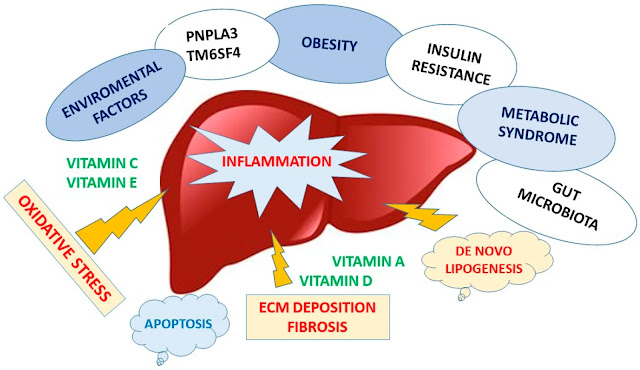
B vitamins can potentially be used to treat advanced non-alcoholic fatty liver disease

Image
A mechanism that causes an advanced type of fatty liver disease has been discovered by researchers at Duke-NUS Medical School in Singapore; it turns out that vitamin B12 and folic acid supplements can stop this mechanism. These results might benefit those who suffer from non-alcoholic fatty liver disease, which is a catch-all phrase for a variety of liver disorders affecting people who consume little to no alcohol and which affects 4 in 10 adults in Singapore and 25% of all adults worldwide. The most common reason for liver transplants globally is non-alcoholic fatty liver disease, which causes fat to accumulate in the liver. Due to its link to diabetes and obesity, two serious public health issues in Singapore and other developed nations, it has a high prevalence. Non-alcoholic steatohepatitis is the term used when the disorder proceeds to inflammation and the production of scar tissue (NASH). The study's first author, Dr. Madhulika Tripathi, a senior research fellow with the Labo...

Research on recognizing facial emotion expressions could change our understanding of autism

Image
It's a prevalent misconception that people with autism have low emotional awareness and little understanding of how successful their own emotional recognition is. However, new Australian research shows that adults with autism are just marginally less accurate than their non-autistic friends at recognizing facial expressions of emotion. Recent studies contradict commonly held beliefs that individuals with autism have trouble recognizing social cues and have little understanding of how others read facial expressions, as shown in two publications recently published in the premier international journal Autism Research. In a Flinders University study, 63 persons with autism and 67 non-autistic adults (IQs ranging from 85 to 143) took part in three to five-hour sessions to compare their abilities to recognize 12 different facial expressions of emotion, such as rage and grief. Throughout the course of her PhD, Dr. Marie Georgopoulos gathered a variety of data, which the research team late...

Perceived choice in music listening is linked to pain relief

Image
According to a recent research on the subject, persons who felt as though they had some influence over the music they listened to were more likely to experience pain alleviation than those who did not feel this way. On August 3, 2022, Dr. Claire Howlin of Queen Mary University of London in the United Kingdom and associates from University College Dublin in Ireland report these findings in the open-access journal PLOS ONE. Listening to music can help relieve pain, especially chronic pain, which is discomfort that lasts longer than 12 weeks. The underlying processes of these advantages, particularly for acute pain, which is defined as discomfort lasting less than 12 weeks, remain unknown. Basic musical elements like speed or vigor appear to be less significant for pain treatment; instead, feeling in control of the music may be vital. However, prior research mostly concentrated on results from lab-based samples and ignored pre-existing acute discomfort in the actual world. Howlin and coll...

Researchers identify how cells move faster through mucus than blood

Image
The University of Toronto, Johns Hopkins University, and Vanderbilt University researchers found that some cells move surprisingly faster in thicker fluid than in thinner fluid, such as honey or mucus instead of blood. This is because the ruffled edges of these cells can sense the viscosity of their environment and change to move more quickly. Their combined findings in cancer and fibroblast cells—the type that frequently leaves tissue scars—indicate that the viscosity of a cell's environment plays a significant role in disease. This finding may explain the development of tumors, the formation of scars in cystic fibrosis-affected lungs that are mucus-filled, and the healing of wounds. Membrane ruffling is a mechanosensor of extracellular fluid viscosity, a study that was just published in Nature Physics, provides fresh insight into the little-studied topic of cell environments. According to Sergey Plotnikov, assistant professor in the Department of Cell and Systems Biology in the F...

What's the most popular color in the world?

Image
It may be blue, teal, or anything in between, depending on the poll. Between the colors of red for roses and blue for violets are a million different shades. But which of these hues is, according to statistics, the most well-liked globally? It seems that humankind's preferred color isn't consistent. According to a YouGov study from 2015(opens in new tab), blue is the most preferred hue worldwide. Meanwhile, The Independent stated that in 2017, a poll of 30,000 individuals in 100 different nations revealed that deep teal was the most preferred hue (opens in new tab). According to the year, survey technique, and population sampled, the answer appears to change. In addition, culture has a big impact on people's color choices. For instance, a 2019 research in the journal Perception(opens in new tab) examined persons from the Polish, Papuan, and Hadza cultures in terms of their preferences for colors. (The Hadza are a Tanzanian hunter-gatherer people.) The preferred colors varie...

Engineers develop stickers that can see inside the body

Image
Clinical staff may view a patient's internal organs in real time thanks to ultrasound imaging, a safe and non-invasive window into the workings of the human body. Trained technicians use ultrasound wands and probes to manipulate sound waves into the body in order to obtain these pictures. The heart, lungs, and other deep organs of the patient may be seen in great resolution because to the reflection of these waves. At the moment, ultrasound imaging requires heavy, specialized equipment that is only found in medical facilities and clinics. The technology may soon be as wearable and accessible as buying Band-Aids at the drugstore thanks to a new design by MIT engineers. The engineers describe their innovative ultrasound sticker design in a study that will be published in Science today. The ultrasound sticker is a stamp-sized gadget that adheres to the skin and can continuously image inside organs for 48 hours. The gadgets yielded real-time, high-resolution photos of the deeper organs...