Posts

Showing posts with the label Health

It doesn't matter much which fiber you choose -- just get more fiber!
Image
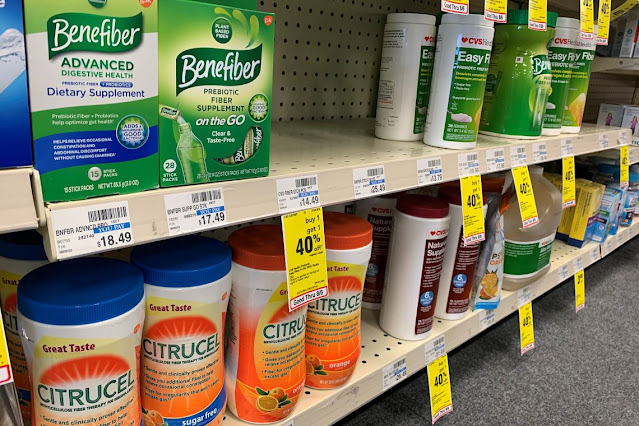
It might be daunting for customers to choose from the vast selection of dietary fiber supplements in the pharmacy or grocery aisle. They also offer a variety of health claims without getting FDA permission or evaluation. How then can you determine which supplement is effective and ideal for you? People who had been eating the least amount of fiber prior to the study showed the greatest benefit from supplements, regardless of which ones they consumed, according to a rigorous analysis of the gut microbes of study participants who were fed three different kinds of supplements in different sequences. According to research author and assistant professor of molecular genetics and microbiology at Duke University Lawrence David, "The persons who responded the best had been consuming the least fiber to start with." Dietary fiber has advantages beyond the advertised easier defecation. Fermentable fiber, which is composed of dietary carbohydrates that some bacteria can digest but which ...
B vitamins can potentially be used to treat advanced non-alcoholic fatty liver disease

Image
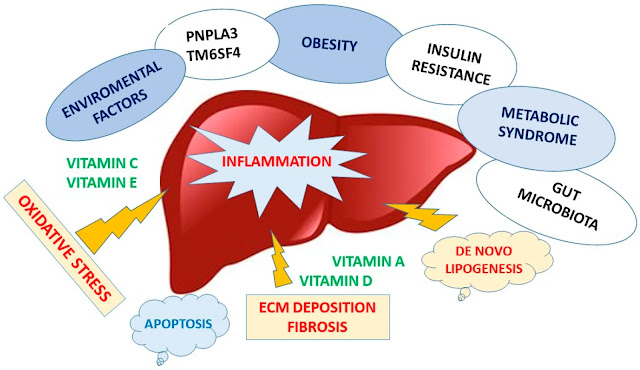
A mechanism that causes an advanced type of fatty liver disease has been discovered by researchers at Duke-NUS Medical School in Singapore; it turns out that vitamin B12 and folic acid supplements can stop this mechanism. These results might benefit those who suffer from non-alcoholic fatty liver disease, which is a catch-all phrase for a variety of liver disorders affecting people who consume little to no alcohol and which affects 4 in 10 adults in Singapore and 25% of all adults worldwide. The most common reason for liver transplants globally is non-alcoholic fatty liver disease, which causes fat to accumulate in the liver. Due to its link to diabetes and obesity, two serious public health issues in Singapore and other developed nations, it has a high prevalence. Non-alcoholic steatohepatitis is the term used when the disorder proceeds to inflammation and the production of scar tissue (NASH). The study's first author, Dr. Madhulika Tripathi, a senior research fellow with the Labo...

Breast Cancer Is Being Overdiagnosed and Overtreated – Why?

Image
The question of whether the benefits of breast cancer screenings have gradually waned to the point where they are no longer outweighed by the costs of overdiagnosis and overtreatment is brought up by a new research. Breast cancer testing is expensive. A Danish/Norwegian research that looked at 10,580 breast cancer deaths among Norwegian women between the ages of 50 and 75 demonstrated this. "As cancer treatments advance, the screening's positive impact is currently decreasing. The death rate for breast cancer has nearly decreased in half over the past 25 years, according to the study's lead author, Henrik Stvring. Researchers claim that the problem is that screenings lead to overdiagnosis and overtreatment, which has a cost on both a human and financial level. Overtreatment and overdiagnosis When screening was originally introduced, it was predicted that about 20% of fatalities among those who underwent screening may have been prevented. In Denmark, this amounted to about ...

Dietary Supplement Cuts Risk of Hereditary Cancer by 60%, Scientists Find

Image
Adding more resistant starch to the diets of people with a condition that increases their risk of developing certain cancers can reduce their risk of some of those cancers by more than 60%, according to a study involving more than 1,000 participants from around the world and more than 20 years of research. The results were so convincing in reducing the incidence of upper gastrointestinal (GI) malignancies in particular that the researchers are now trying to reproduce them to be sure they aren't missing anything. "We discovered that resistant starch lowers the risk of several malignancies by more than 60%. The top region of the intestine was where the benefit was most noticeable "says Newcastle University's John Mathers, the study's principal investigator and a nutritionist. Esophageal, gastric, and pancreatic cancers are examples of upper GI malignancies. Tim Bishop, a genetic epidemiologist from the University of Leeds, says, "The results are encouraging, bu...

Decades Ago, A Woman Survived Being 'Frozen Solid'. Here's The Science

Image
In Minnesota, early on New Year's Eve in 1980, a guy by the name of Wally Nelson found his friend's body lying in the snow not far from his door. Jean Hilliard, a 19-year-old, was driving home from a night out when her car stopped. She ventured out into the - 30 Celsius (minus 22 Fahrenheit) night air wearing nothing more than a winter coat, mittens, and cowboy boots in order to ask her buddy for help. She fell at some time and went unconscious. According to various sources, Hilliard's body was left "frozen solid" after six hours of being exposed to the cold. Years later, Nelson would recall the incident in an interview with Minnesota Public Radio, saying, "I grabbed her by the collar and dragged her onto the porch." "I assumed she was deceased. I noticed some bubbles coming out of her nostrils even though she was as hard as a board." Nelson's quick action saved Hilliard from joining the hundreds of deaths attributed to hypothermia each yea...

Mayo Clinic Study Uncovers Dietary Trick To Help Prevent Kidney Stones

Image
Calcium and potassium-rich diets may help prevent recurrent kidney stones with symptoms. In addition to the intense agony they can inflict, kidney stones are linked to cardiovascular disease, osteoporosis, and chronic kidney disease. You have a 30% probability of developing another kidney stone within five years if you've already had one. To avoid symptomatic kidney stones returning again and again, physicians typically advise dietary adjustments. Unfortunately, there is limited information on dietary adjustments for people who only get kidney stones once vs those who do so often. Therefore, in order to evaluate the effects of dietary modifications, Mayo Clinic researchers created a prospective study. Their findings suggest that adding foods high in calcium and potassium to diets may help avoid symptoms of kidney stones from recurring. The participants in the trial included a control group of 384 persons and 411 patients who had just developed their first symptoms of kidney stones....

Everything you need to know about UPF sun protection

Image
The wearing of dark-colored, long-sleeved shirts in the midst of North Carolina's sweltering summers was strongly encouraged by my great-grandmother. She always responded the same way whenever I questioned her about why she was wearing that gardening attire on a 95-degree day: "What keeps out the cold will keep out the sun." Her ancestors' knowledge was accurate. People's skin issues, such as wrinkles, sunburns, irritated skin, and some types of cancer, are thought to be largely attributed to ultraviolet radiation, whose main source is the sun. In the past, people discovered techniques to shield themselves from the sun. Native Alaskans made snow goggles out of wood or bone to shield their eyes from UV rays that were reflected off the snow. Thanaka, a paste made from crushed tree bark, is still utilized in Myanmar. Today, sunscreens and UPF materials are the two main types of sun protection available to consumers. According to Travis W. Blalock, an associate profes...

Why Do Humans Sleep? Scientists Find Clues for Solving This Age-Old Mystery

Image
New understandings of brain activity during sleep might aid in the development of aids for people with neurologic disease or impairment. What makes people sleep? Scientists have debated this topic for hundreds of years, but a recent study from Massachusetts General Hospital (MGH) researchers, conducted in collaboration with specialists from Brown University, the Department of Veterans Affairs, and several other institutions, adds new information that could help solve this mystery. Their study, which was just published in the Journal of Neuroscience, may aid in the explanation of how people recall information and learn new abilities. It could also aid in the development of aids for those with neurological disorders or accidents. Lead author of the study and neurologist Daniel Rubin, MD, Ph.D., of the MGH Center for Neurotechnology and Neurorecovery, claims that the "replay" phenomena that occurs when we sleep has long been known to science. The brain is supposed to employ repl...

Foods And Drinks Have Gotten Sweeter Over The Last Decade, And It's a Global Problem

Image
The evolutionary predilection of humans is towards sweetness. Our ancestors used sweet foods like fruit and honey as a major source of energy. But in the current world, sweetened foods are widely accessible, incredibly affordable, and heavily promoted. We are currently consuming too much sugar in our meals and beverages, especially added sugar as opposed to naturally occurring sugar. The health effects of consuming too much added sugar are negative. It has been connected to dental decay, type 2 diabetes, and obesity. Manufacturers began sweetening food with non-nutritive sweeteners as a result of these health worries. These sweeteners include both artificial sweeteners like aspartame and those derived from natural sources like stevia, and they all have a kilojoule content of zero to very little. According to our study, which was just published, packaged foods and beverages now include far more added sugars and non-nutritive sweeteners than they did ten years ago. This is particularly t...